






See All
Preferences
My Communities
My Discussions
My Email Digests
Announcements
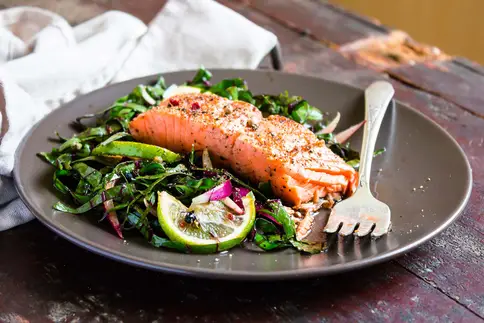
New US Diet Guidelines: What Not to Eat
Instead of just giving Americans a list of healthy food choices, the federal government takes a stab at showing us what not to eat. Get the facts here.
I was pulling some data as part of a research project I'm working on and found the article below. It is very interesting on several levels. The article was done by a British research group called The Medical Research Council and British Heart Foundation (MRC/BHF) Heart Protection Study (HPS) and before it comes up, here is their statement of funding relationship:
Role of the funding source[br> [br> The trial was designed, conducted, analyzed, and interpreted by the investigators, independently of all funding sources. The writing committee had full access to the study data and had final responsibility for the decision to submit for publication.
The purpose of this study was to reach out to over 20,000 participants in previous trials concerning the use of Simvastatin. They gathered data on their health and cholesterol levels for the past 11 years.
The basis of the findings is interesting. They again prove that for each 1 mmol decrease in LDL cholesterol there is up to a 27% reduction in a major cardiac event or death, which is a pretty major event itself.
Similar patterns were seen for each component of major vascular events (figure 1). For major coronary events, a 27% (SE 4) reduction was noted during the in-trial period (p<0·0001). During the post-trial period, the incidence rates were similar in both treatment groups (RR 0·96 [95% CI 0·88-1·04>; p=0·31), although a further reduction was recorded in first non-fatal myocardial infarction (413 [4·8%> vs 465 [5·7%>; p=0·01). For strokes, a 24% (SE 5) reduction was seen during the in-trial period (p<0·0001), reflecting a 29% (SE 6) reduction in definite ischemic stroke and no difference in hemorrhagic stroke (51 [0·5%> vs 56 [0·5%>; p=0·59). During the post-trial period, the incidence rates were similar in both treatment groups (0·98 [0·86-1·12>; p=0·77), with no adverse effect on hemorrhagic stroke (38 [0·4%> vs 51 [0·6%>; p=0·13). For revascularization procedures, a significant 24% (SE 4) reduction was seen during the in-trial period (p<0·0001). During the post-trial period, the incidence rates were similar in both treatment groups (0·93 [0·84-1·04>; p=0·20).
Also, they found that the effect of using Simvastatin continues for 5 years after use as well. The long term results of the use of Simvastatin remained unchanged during the 6 year follow up period which is reassuring as no increase in adverse effects were noted. The bottom line of their findings is stated below;
Prolonged follow-up in the Heart Protection Study now shows that reduction of about a quarter in vascular mortality and morbidity-produced by an average 1 mmol/L reduction in LDL cholesterol with 5 years of statin therapy-persisted largely unchanged during the subsequent 6 years, despite similar LDL cholesterol
Concentrations and statin use in both treatment groups. Reassuringly, no adverse effects on particular causes of non-vascular mortality or major morbidity (including site-specific cancers) were seen to emerge during prolonged follow-up. These findings support prompt initiation and long-term continuation of statin treatment in people at increased risk of vascular events.
This is a very interesting article. I know some is a bit detailed but we can discuss any unclear issues.
http://www.natap.org/2011/newsUpdates/121511_04.htm
The trial was designed, conducted, analyzed, and interpreted by the investigators, independently of all funding sources. The writing committee had full access to the study data and had final responsibility for the decision to submit for publication.
In fact, the HPS was a large randomized controlled trial run by a clinical trial unit which is a administrative equivalent to our DSMBs and are controlled by the UK. The trial itself was funded by the Medical Research Council and the British Heart Foundation which is an independent research organization. The BHF is mainly funded by legacies and wills. accounting for 44% of their income, the other 56% is made up of other voluntary income (32%), profit from the retail division (19%) and investment income (5%). In fact, a clinical trial unit is not an entity, it is a managing board appointed by the British government. There is a very clear chain of authenticity and accuracy with the Brits, you just have to know how it works.
Bottom line, the HPS was funded by an independent research organization along with the funding branch of the UK and managed by the British Government.
http://www.ctsu.ox.ac.uk/news
So let's consider if we can trust these numbers. First, you would have to believe that Oxford University would risk their CTU status. Any violation of the public trust would ruin this great institution and result in their being excluded from participating in any further studies in Great Britain. I am convinced they would never risk it as the government there is very, very intrusive to studies and it is the role of the CTU to be accountable for the accuracy of the data. It's just not going to happen.
Also, if you believe that most trial results are tainted because they were funded by a drug company, how do you reconcile the fact a trial was funded by an independent research alliance? Are the slanted to not falsifying results?
The reality is that HPS was done correctly under the administration of a well honored educational institution and the scrutiny of the government of Great Britain. If one is a realist, it is necessary to trust but verify and HPS has certainly met that criteria.
This conflict of interest is why I believe the study results paint such a wonderful picture with no negatives. Its not realistic and red flags pop up everywhere.
Conflicts of interest are not going away. This is the world we live in. Money buys loyalty. Nobody bites the hand that feds them.
There should be no wonder why they issued such glowing results.
In my profession, when you can't prove one outcome try to prove the opposite outcome. In other words if we can't prove that a trial has been biased by funding, can we prove that one has not? The answer is yes.
HPS2-THRIVE was a study done by the CTSU at Oxford which was funded by Merck to test a new cholesterol drug called Tredaptive. According to Merck based on the data gathered by the CTSU at Oxford while conducting HPS2-THRIVE, Tredaptive did not achieve the results desired and the drug has now been pulled. What we have here is some one biting the hand that feeds them.The CTSU at Oxford reported true and honest results and the drug company Merck reacted as it should and pulled the drug. This is open and undeniable evidence that this trial was not influenced by outside financial interests.
So as a man of logic I ask myself, "self, is it logical that the CTSU at Oxford would be influenced by an outside financial interest"? The answer to me is no, they have proved their integrity. However, there will always be some that do not look at the logic but look for the illogical.
You certainly are entitled to your opinion.
I believe differently. I believe money talks. I believe people can be bought, and bias from conflicts of interest do exist.
You may find this "Illogical" however the Office of Research Integrity discusses this issue in detail.
Great, show me where the ORI identifies a proven case of bias, just like I have shown the opposite. Please don't give me any that are speculation or theory, just actual drug trials that were managed by a DSMB where the data was intentionally dishonest and resulted in a drug being pulled from the market. Then we can dig into the details.
I have proven that the CTSU of Oxford University has acted properly and honestly even when funding is in question so show me a specific trial that allowed a flawed drug to get on the market. Keep in mind that any you site will just prove the system works.
I am VERY familiar with the ORI and their responsibilities and outcomes. I am responsible to them for any of my work that ends up in a published paper.
What I believe is that the vast majority, probably better than 99%, of trials are conducted without bias. I believe a system of checks and balances is in place. I believe that there are necessary rules and regulations in place that are under the immense scrutiny of the governing bodies who act in the public's best interest. So I'm a numbers, facts, reality, logic and experience kind of guy.
Women's Health Newsletter
Find out what women really need.
Featuring Experts
There are no Expert stories for this community right nowHelpful Tips
Helpful Resources
Related News
Related Drug Reviews
- Drug Name User Reviews
Report Problems to the
Food and Drug Administration
You are encouraged to report negative side effects of prescription drugs to the FDA. Visit the FDA MedWatch website or call 1-800-FDA-1088.
Other Cholesterol Management Information
More Related Communities
The opinions expressed in WebMD User-generated content areas like communities, reviews, ratings, or blogs are solely those of the User, who may or may not have medical or scientific training. These opinions do not represent the opinions of WebMD. User-generated content areas are not reviewed by a WebMD physician or any member of the WebMD editorial staff for accuracy, balance, objectivity, or any other reason except for compliance with our Terms and Conditions. Some of these opinions may contain information about treatments or uses of drug products that have not been approved by the U.S. Food and Drug Administration. WebMD does not endorse any specific product, service, or treatment.
Do not consider WebMD User-generated content as medical advice. Never delay or disregard seeking professional medical advice from your doctor or other qualified healthcare provider because of something you have read on WebMD. You should always speak with your doctor before you start, stop, or change any prescribed part of your care plan or treatment. WebMD understands that reading individual, real-life experiences can be a helpful resource, but it is never a substitute for professional medical advice, diagnosis, or treatment from a qualified health care provider. If you think you may have a medical emergency, call your doctor or dial 911 immediately.
Health Solutions From Our Sponsors
©2005-2013 WebMD, LLC. All rights reserved.
WebMD does not provide medical advice, diagnosis or treatment. See additional information.