presents
WebMD Community Talk Show
Serving up a new debate daily, this is the place where putting up your dukes and defending your opinion is encouraged.
See All
Preferences
My Communities
My Discussions
My Email Digests
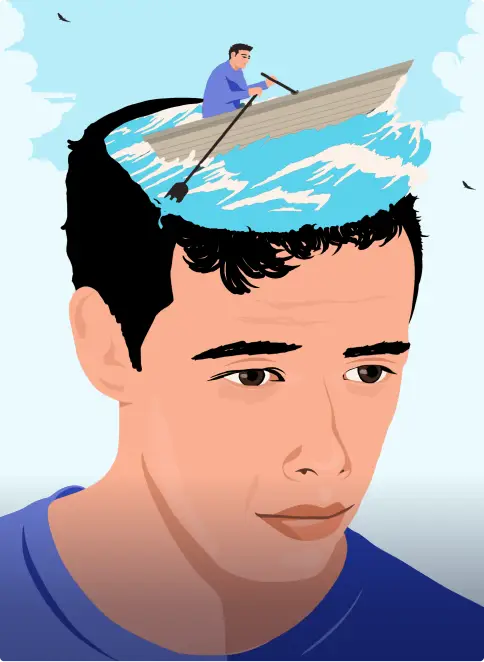
A recent shortage of ADHD medications in the U.S. led to a lot of debate around whether all of those folks diagnosed with ADHD really do have the disorder.
Do you think everyone diagnosed with ADHD has it?
Why or why not?
(If you have ADHD or think you may have, you can get support and expert answers on our ADHD community here at WebMD.)
It just seems so odd that there has been such an increase in the number of folks diagnosed. Yes, you can say that we are just learning more about human behavior and identifying people who were slipping through the cracks, but how many kids act up in school because they just need a few minutes of the day to run around and be kids? Many of these kids also attend structured after school programs and are involved in sports with their siblings to the point where they don't have any time to play at home either.
I have no doubt some people really do suffer, but how many are just a product of an environment that teaches the 10 second attention span and doesn't teach people to focus or are a product of a learning environment that doesn't give them the tools to succeed.
I was diagnosed at age 19. It changed my life dramatically for the better. I currently do not take medications, but I know many people who need them to function at home, work and school.
So. the FDA and manufacturers need to get their act together and supply these legal medications to patients legitimately prescribed them!
That said, there needs to be a better system in place for drug manufacturing as a whole. There are a record number of drug shortages because so many of the off patent drugs out there are vital for treatment of various illnesses, but generics turn so little profit, the manufacturers don't feel pressured to ensure their supply.
For many ADHD/ADD patients it is only the generic that is in short supply. There is plenty of name brand, but how many patients can afford their copay jumping from $10 to $200?
For anonymous, true ADHD/ADD is a chemical imbalance in the brain. I don't know that the learning environment would have an effect on that. But honestly, giving elementary kids 2 15 minute recesses during the day would probably make things easier. When I was in school we had recess and then time after lunch to play before going back to class. Not to mention unstructured play is good for a child's mental development. Gym is great for exercise and will help, but so many schools are getting rid of gym or decreasing it's frequency. And of course kids aren't getting exercise at home in some cases, which makes things worse.
I was in the lobby of an elementary school a year ago, waiting on my then-4 yr old daughter to finish speech therapy. The kids in first grade were being herded into the gym at the time for a new program that involved learning while moving - wish I knew the name - but skills were practiced while the whole body engaged in the activity, (like climbing a ladder while naming the picture or concept on each rung, that kind of thing). The principal, standing near the entryway, said that previous "wisdom" was that letting kids run around first thing in the morning would make them hyper and unmanageable throughout the rest of the day - but she was amazed to find that the exercise actually contributed to their learning and settled them down to learn the rest of the day. I wanted to to say "duh"... we need more free play (unstructured learning) to better focus our kids for the structure of their school day.
If the former, yes, the epidemiological research has been exhaustive and conclusive. In fact, most experts quickly conced that the numbers are most likely conservative, especially the 4.1% figure for adults.
As I write in my book (Is It You, Me, or Adult A.D.D.?). that 4.1% figure is based on diagnostic criteria that was developed for children's ADHD symptoms, most specifically boys. That means many Adult ADHD-related challenges weren't even included in the criteria. The experts I interviewed put the more accurate figure at closer to 15% of adults having ADHD.
To me, it is extremely easy to see this likelihood. Just look at the percentage of the adult population in the U.S. who has dropped out of high school, is un- or under-employed, suffering substance abuse problems and obesity, in bankruptcy, and more. These are all risks of untreated ADHD. And the numbers are shockingly high.
If the latter question is what you mean -- do diagnosing professionals make mistakes? Well, of course. Especially with psychiatric syndromes, it can be difficult for the non-expert to distinguish one condition from another (for example, ADHD from bi-polar).
But this is not limited to psychiatric conditions. Modern medicine has become the domain of specialists who often do not understand physical systems beyond the one they have studied (e.g. cardiovascular). They often do not understand the intricate interplay of all physical systems, especially when it comes to the effect of going without exercise, proper nutrition, etc.
All that said, in my experience, most people who have read carefully about ADHD and developed a strong suspicion that they have it have usually been right. Sadly, this often comes after years of misdiagnosis and ensuing treatment that often exacerbated their condition. I am thinking primarily of adults with ADHD who were diagnosed and long treated for "depression" or "anxiety" and their ADHD symptoms completely missed.
That's not to say that homeschooling isn't a viable option for many. It's when it's used as an "escape" from dealing with ADHD-related challenges that it proves problematic, in my opinion. It simply prolongs the opportunity to receive real and lasting help.
Also, the newer, sustained-action formulations are delivered into the system in a much less disruptive way than the old formulations are, often with a jagged roller coaster throughout the day. Not to mention the inherent irony of asking forgetful people to take 2-3 doses throughout the day.

Actually, some research has shown children with ADHD experience more stress, not less with unstructured time. One study showed that these kids experience more stress on the weekends (unstructured time) than during the school week. And I can assure you many adults with ADHD are the same way.
What that teacher was doing sounds like a different thing entirely -- activating the body to activate the mind. That's very structured.
As for exercise in the morning, Dr. John Ratey documented the increased academic success that one Naperville, IL school enjoyed by implementing structured exercise each morning.
Thanks so much for coming over from the ADHD board and chiming in with your wisdom!
Olivia
WebMD Talk Show
Feel like a friendly debate? Take the gloves off and defend your viewpoint.
Learn MoreWomen's Health Newsletter
Find out what women really need.
Most Popular Discussions
-
97 Replies
-
90 Replies
-
9 Replies
-
9 Replies
-
8 Replies
Related News
Expert Blog
Diagnosis: Reality Check
Putting perspective on health news and names in the spotlight.Read More
Other Great Information
- WebMD News Center Read the latest in health news and features.
- WebMD Newsroom Blog Breaking health news at your fingertips.
- WebMD Reality Check Blog Your daily dose of reality around fun and intriguing health topics.
-
The opinions expressed in WebMD User-generated content areas like communities, reviews, ratings, or blogs are solely those of the User, who may or may not have medical or scientific training. These opinions do not represent the opinions of WebMD. User-generated content areas are not reviewed by a WebMD physician or any member of the WebMD editorial staff for accuracy, balance, objectivity, or any other reason except for compliance with our Terms and Conditions. Some of these opinions may contain information about treatments or uses of drug products that have not been approved by the U.S. Food and Drug Administration. WebMD does not endorse any specific product, service, or treatment.
Do not consider WebMD User-generated content as medical advice. Never delay or disregard seeking professional medical advice from your doctor or other qualified healthcare provider because of something you have read on WebMD. You should always speak with your doctor before you start, stop, or change any prescribed part of your care plan or treatment. WebMD understands that reading individual, real-life experiences can be a helpful resource, but it is never a substitute for professional medical advice, diagnosis, or treatment from a qualified health care provider. If you think you may have a medical emergency, call your doctor or dial 911 immediately.
Health Solutions From Our Sponsors
©2005-2013 WebMD, LLC. All rights reserved.
WebMD does not provide medical advice, diagnosis or treatment. See additional information.