






See All
Preferences
My Communities
My Discussions
My Email Digests
The most common reason for a menstrual pattern like you have described, in a non-birth control pill user, is not having an ovulation every month. In a normal cycle, estrogen is produced all month. Estrogen is responsible for building up the lining of the uterus so you have something to shed each month.
In a normal cycle, progesterone production increases following ovulation and release of an egg.. Progesterone "stabilizes" the uterine lining in preparation for a possible implantation of a new pregnancy. If one is not pregnant that month the levels of estrogen and progesterone fall, triggering the release of the uterine lining—your period. So, if one does not ovulate, the estrogen build up of the lining continues, but without the usual ovulation associated progesterone. Thus, the hormone levels don't decline, and the lining stays up inside the uterus—often as a missed/late missed period. Alternatively, the built up lining can begin to shed on its own creating erratic bleeding patterns which are usually "too-light" or super heavy and prolonged.
Causes for not ovulating are multifold: thyroid problems, pituitary problems, ovarian cysts, physical stressors (eg sudden increases in exercise, crash dieting), emotional stressors (problems with parents or boyfriends/girlfriends, exams), increased body weight, anorexia, rotating shifts at work, etc.
A common treatment for erratic bleeding is to try using birth control pills. Ubfortunately, breakthrough bleeding (BTB) can be a common side effect of most types of hormonal birth control (eg pills/patch/ring/shot/Mirena IUD). Among birth control pill users BTB frequently occurs after a missed or late pill. In her case it sounds like she is careful to take pills at the same time daily. More remotely, BTB in a pill user can arise if she has gotten a chlamydia infection. Yet, if both are monogamous this is not going to apply.
When a woman uses hormonal birth control it can make the lining of the uterus more unstable--so it is easier to have some of it begin to shed. Sometimes the lining is less stable because the hormones make the lining much thinner (actually this is good as a thin lining is a healthy lining). This is the most likely reason for BTB in a long term pill user. Sometimes the lining is unstable because the hormones can make parts of the lining out of synch. This is the most common reason for BTB in the initial three months of pill use.
Bottom line, BTB on hormonal methods of birth control is a nuisance side effect. The protection from pregnancy is still in effect. If your poor cycle control persists she should return to her GYN or clinic. Often a change in the brand, or formula, of birth control pill will fix the problem.
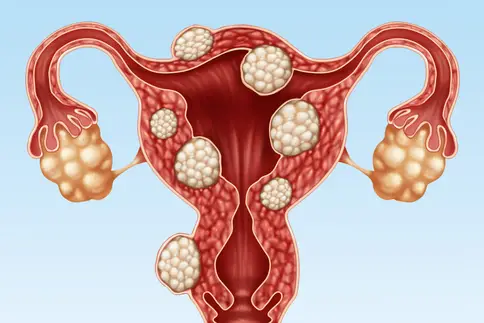
Among older pill users there can be "structural" problems which enhance BTB. "Structural" means when excessive bleeding is due to actual problems within the cavity or walls of the uterus. Some examples of this would include fibroids of the uterus, endometriosis of the muscular wall of the uterus ("adenomyosis"), infections of the lining of the uterus, polyps of the uterine lining.
Hopefully her GYN will alter her pills to gain better cycle control. Your idea of a prenatal vitamin is a good one. Depending upon her blood values she may need to take an actual iron tablet. Her GYN can give her more specific instructions. Gosh, I hope that she can get this taken care of before it impacts her school responsibilities.
Yours,
Jane
In your daughter's case, getting the bleeding to stop is the first concern. If, in fact, she has a tendency for non-ovulation that can make it more difficult to conceive when she wants to get pregnant. Your GYN can give her more "for sure" information based upon her health history.
Yours,
Jane
Thanks!!!
or Planned Parenthood?
You mentioned that the spotting began about cycle day 14 (cycle day 1 being the first day of your last period). Given this specific timing the most likely cause would be bleeding with ovulation. Right before ovulation there is a brief spike of estrogen. When this level drops back down to normal, the sharp decline can destabilize the lining of the uterus leading to spotting/bleeding. Some women have this sign of ovulation every month; others only rarely. Fortunately the amount is usually scant and brief in duration. Occasionally, it can last as long as an actual period.
Some other possible causes of erratic spotting can include a new chlamydia infection (unlikely if you are both monogamous). polyps of the lining of the uterus (way more common in midlife women), or missed/erratic ovulations (usually there will be a history of missed/irregular periods).
If your erratic bleeding persists, or you develop other symptoms (eg pelvic pain from an infection or ovarian cyst) see your GYN or local family planning clinic. Hopefully, since it never happened before, this is an isolated episode of ovulation-linked spotting. Given the levels of personal stress (and the super demands of two young children) I am amazed that your cycles have been so regular.
In Support,
Jane
See Related Women's Health Communities
Women's Health Newsletter
Find out what women really need.
Featuring Experts
Helpful Tips
Helpful Resources
Expert Blog
Below the Belt: Women's Health - Jane Harrison-Hohner, RN, RNP
From HPV to irregular periods to PMS to fibroids, Jane Harrison-Hohner, RN, is here to share her knowledge and insight...Read More
Related News
Report Problems to the
Food and Drug Administration
You are encouraged to report negative side effects of prescription drugs to the FDA. Visit the FDA MedWatch website or call 1-800-FDA-1088.
Other Women's Health Information
More Related Communities
The opinions expressed in WebMD User-generated content areas like communities, reviews, ratings, or blogs are solely those of the User, who may or may not have medical or scientific training. These opinions do not represent the opinions of WebMD. User-generated content areas are not reviewed by a WebMD physician or any member of the WebMD editorial staff for accuracy, balance, objectivity, or any other reason except for compliance with our Terms and Conditions. Some of these opinions may contain information about treatments or uses of drug products that have not been approved by the U.S. Food and Drug Administration. WebMD does not endorse any specific product, service, or treatment.
Do not consider WebMD User-generated content as medical advice. Never delay or disregard seeking professional medical advice from your doctor or other qualified healthcare provider because of something you have read on WebMD. You should always speak with your doctor before you start, stop, or change any prescribed part of your care plan or treatment. WebMD understands that reading individual, real-life experiences can be a helpful resource, but it is never a substitute for professional medical advice, diagnosis, or treatment from a qualified health care provider. If you think you may have a medical emergency, call your doctor or dial 911 immediately.
Health Solutions From Our Sponsors
©2005-2013 WebMD, LLC. All rights reserved.
WebMD does not provide medical advice, diagnosis or treatment. See additional information.