



See All
Preferences
My Communities
My Discussions
My Email Digests
Announcements
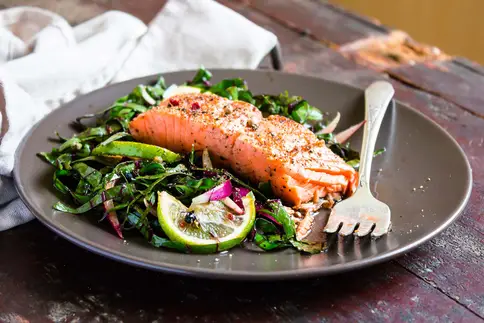
Instead of just giving Americans a list of healthy food choices, the federal government takes a stab at showing us what not to eat. Get the facts here.
I was told back in October that I had early onset CAD and was put under strict orders to drop weight, modify my diet, and get more exercise. I did all that I was told and more. Thought I was on the right track. Recently during workouts, I began having some chest pains. Went to my doc for what I thought was reflux and days later, came out of the hospital with three stents. I had no idea things were so bad and was deeply upset by the whole experience. I am told the procedure went well and that I will soon be doing all the things I used to do. But I find it hard to believe. Every little pain or twinge makes me jump and wonder if something is wrong with one of my stents. The very thought of being physically active again scares me. I feel like a walking time bomb. Is this normal? Am I overreacting? Sometimes, I want to just sit here and cry . . . feeling like my life is over. I am only 38! I have to find more info, but t has been hard.
- John
"I feel like a walking time bomb. Is this normal?"
This is more normal than one may think.
As various medical literature and the worldwide media have reported, clinically significant (blood flow-limiting) coronary artery disease (CAD), sometimes leading to a dreaded heart attack, is increasing in those in their mid/late 30s to early 40s.
CAD actually begins (the process and progression of) very early in life, even as early as in the pre-teen/teenage years. Fatty streaks (represents the earliest precursor to plaque development and plaque is the pathological hallmark of atherosclerosis) are the beginning of atherosclerosis in the coronary arteries. Soft plaque (more dangerous and unpredictable than hard or calcified plaque) is the early stage of atherosclerosis.
CAD is a lifelong unpredictable (can exhibit periods of stabilization, acceleration, and even some regression) condition.
Coronary stents are only a Band-aid or spot-treatment, as this doesn't address the disease processes and what drives the progression.
Good doctor-patient/patient-doctor communication and understanding is so very important, essential at ALL times.
Best of luck down the road of life. Live long and prosper.
Take care,
CardioStar*
WebMD community member (since 8/99)
-
-
Be well-informed
WebMD
Living with Heart Disease
Coronary Artery Disease (CAD)
When you have CAD, it is important to take good care of your heart for the rest of your life....
This is especially true if you have had an interventional procedure or surgery to improve blood flow to the heart....../It is up to......
Recognize the symptoms......
Reduce your risk factors.....
Take your medications......
See your doctor for regular check-ups......
http://www.webmd.com/heart-disease/guide/living-with-heart-disease
Coronary artery anatomy
Starting with the left anterior descending, the most critical, next to the ultra-critical left main.
http://www.heartsite.com/html/lad.html
_ . _
The symptoms of artery-narrowing atherosclerosis are highly variable. Those with mild atherosclerosis may present with clinically important symptoms and signs of disease and heart attack, or absolute worst case scenario, sudden cardiac death (SCD) may be the first and only symptom of coronary artery disease (CAD). However, many individuals with anatomically advanced disease may have no symptoms and experience no functional impairment.
_ . _
Good to know, for the primary and secondary prevention of heart attack and brain attack/stroke
Epidemiologic studies (EDS) have revealed risk factors for atherosclerosis (typically affecting the coronary, carotid, and peripheral arteries), which includes age, gender, genetics (gene deletion, malfunction, or mutation), diabetes (cosidered as being the highest risk factor), smoking (includes secondhand), inactivity, obesity (a global epiemic, "globesity", high blood pressure (hypertension), high LDL, high Lp(a), high ApoB, high Lp-PLA2, high triglycerides, low HDL (less than 40 mg/dL, an HDL level of 60/65 mg/dL or more is considered protective against coronary artery disease), high homocysteine, and high C-reactive protein (CRP/hs-CRP).
-
i Quote
"Be a questioning patient. Talk to your doctor and ask questions. Studies show that patients who ask the most questions, and are most assertive, get the best results. Be vigilant and speak up!"
- Charles Inlander, People's Medical Society
.
It's your future......be there.

. .
WebMD/WebMD message board does not provide medical advice, diagnosis, or treatment.
I had three stents put in October 2007. I caught the problem before any heart damaged. My doctor sent me to cardio rehab for 36 sessions. It was a great.
My husband had a heart attack in January of 09 and he has a stent. He was told the same things you were.He walks 3 miles a day mon-fri he does exercises with weights at home
2 to 3 times a week and the hardest thing for him was to lose weight because not only does he love to eat he loves to cook just as much but he has accomplished it. I was with him when he had his heart attack and it has taken some time for me to adjust. Although I don't have a stent like you, I was always scared that something was going to go wrong I could not go to sleep until he did and then I would wake for any movement he made. I do understand how you feel , but it does get better you just have to get back into slowly at first then as time goes by you will become more confident. My husband is 56. Remember the hardest part is over, you have the stents. Your life isn't over, if God was ready for you he would have called taken you. Good Luck
I had a massive heart attack at the age of 36 back in October 2002. The worst part is the doctor in the ER figured I was on drugs instead of have an MI. So they wasted valuable time and the result was major heart damage on the leftside of my heart. My ejection fraction is less than 20. I have a defib/pacemaker and at some point I will be put on the transplant list. Long story and long recovery to the point where I am able to look after our house, animals, hubby, and volunteer at times. It is such a sock to the system. Counseling may be a good idea. Depression goes hand in hand with heart problems. So I have been told. I was scared to death and even now there are times when I get congested I get in a panic.
Find someone to talk to and talk it out. I sure hope you are doing well. If you have questions never be afraid to ask. Its your life and you need to take control of it.
Wendy
Consider doing a medical gnealogy for your children and/or other family members. My faith has helped me thru every situation. God Bless.
God Bless
The feeling of impending doom eventually goes away.
More from WebMD related to this Discussion
Women's Health Newsletter
Find out what women really need.
Featuring Experts
Helpful Tips
Helpful Resources
Expert Blog
The Heart Beat - James Beckerman, MD, FACC
Dr. James Beckerman shares how small, livable lifestyle changes can have a real impact on your risk of heart attack and stroke...Read More
Related News
Related Drug Reviews
- Drug Name User Reviews
Report Problems to the
Food and Drug Administration
You are encouraged to report negative side effects of prescription drugs to the FDA. Visit the FDA MedWatch website or call 1-800-FDA-1088.
For more information, visit the Duke Health General and Consultative Heart Care Center
Other Heart Disease Information
More Related Communities
The opinions expressed in WebMD User-generated content areas like communities, reviews, ratings, or blogs are solely those of the User, who may or may not have medical or scientific training. These opinions do not represent the opinions of WebMD. User-generated content areas are not reviewed by a WebMD physician or any member of the WebMD editorial staff for accuracy, balance, objectivity, or any other reason except for compliance with our Terms and Conditions. Some of these opinions may contain information about treatments or uses of drug products that have not been approved by the U.S. Food and Drug Administration. WebMD does not endorse any specific product, service, or treatment.
Do not consider WebMD User-generated content as medical advice. Never delay or disregard seeking professional medical advice from your doctor or other qualified healthcare provider because of something you have read on WebMD. You should always speak with your doctor before you start, stop, or change any prescribed part of your care plan or treatment. WebMD understands that reading individual, real-life experiences can be a helpful resource, but it is never a substitute for professional medical advice, diagnosis, or treatment from a qualified health care provider. If you think you may have a medical emergency, call your doctor or dial 911 immediately.
Health Solutions From Our Sponsors
©2005-2013 WebMD, LLC. All rights reserved.
WebMD does not provide medical advice, diagnosis or treatment. See additional information.